
PAT Testing Regulations in Ireland: What Businesses Need to Know in 2026
The Importance of Periodic PAT Testing
In today’s business environment, ensuring workplace safety is not just a moral obligation but a legal requirement. One critical aspect of workplace safety that Irish businesses must address is the regular inspection and testing of portable electrical appliances, commonly known as Portable Appliance Testing (PAT). This comprehensive guide explores the current PAT testing regulations in Ireland, highlighting what businesses need to know to maintain compliance and ensure a safe working environment in 2026.


Understanding PAT Testing in Ireland
Portable Appliance Testing (PAT) involves examining electrical appliances and equipment to ensure they are safe to use. These tests include visual inspections and more in-depth electrical testing using specialized equipment. The purpose is to prevent electrical accidents, fires, and other hazards that could lead to injury, death, or property damage.
In Ireland, PAT testing regulations fall under the broader framework of health and safety legislation, primarily governed by the Safety, Health and Welfare at Work Act 2005 and the Safety, Health and Welfare at Work (General Application) Regulations 2007 (as amended).
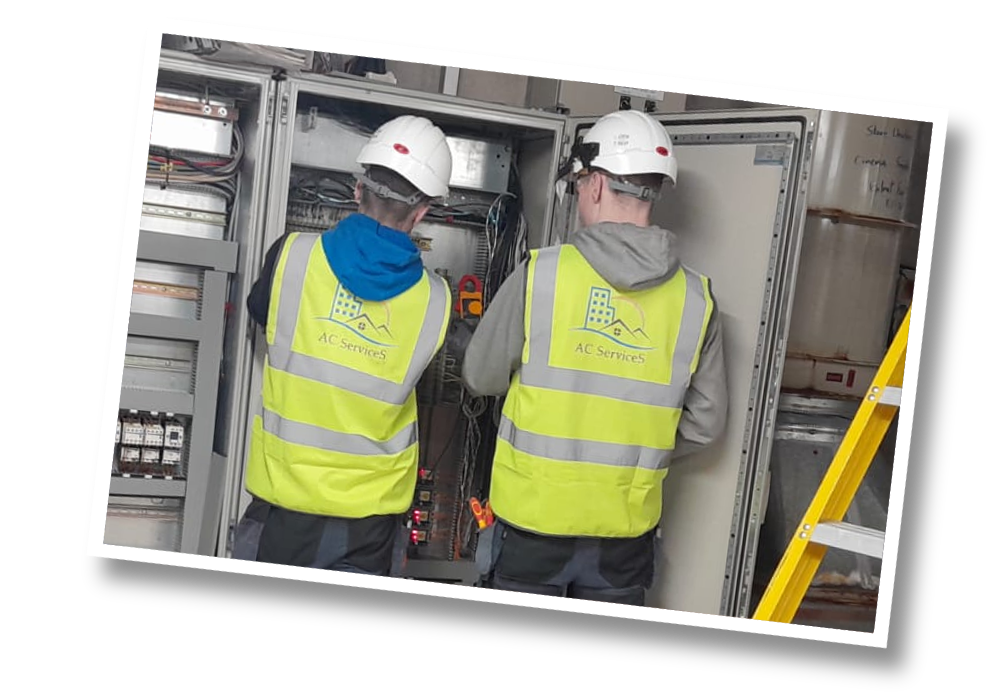
AC Services based In Cork are experts in PAT Testing. With clients all around Cork we can provide PAT Testing information on regulations, pricing and services for your commercial business.
Irish Health & Safety Authority (HSA) Guidelines
The Health and Safety Authority (HSA) is Ireland’s national body responsible for ensuring workplace health and safety, including the safety of electrical equipment. While PAT testing is not explicitly mandated by name in Irish legislation, the requirement for electrical safety is clearly established through various provisions.
Legal Framework
The HSA operates under the framework established by the Safety, Health and Welfare at Work Act 2005, which places a general duty on employers to ensure the safety, health, and welfare of employees at work. Section 8 of this Act specifically requires employers to:
- Provide and maintain safe plant and equipment
- Ensure safety and absence of risk to health in connection with the use of any article or substance
- Provide systems of work that are planned, organized, performed, maintained, and revised as appropriate to be safe
The Safety, Health and Welfare at Work (General Application) Regulations 2007 further detail these obligations, with Part 3 specifically addressing electricity. Regulation 81 states that an employer must ensure that:
- Electrical equipment is designed, constructed, installed, maintained, protected, and used so as to prevent danger
- Appropriate checks are carried out to protect against hazards that might arise from mechanical or electrical failure
2025 HSA Guidelines for PAT Testing
As of 2025, the HSA has strengthened its guidelines on electrical safety in response to increasing workplace incidents involving electrical equipment. The HSA now strongly recommends that all businesses implement a formal PAT testing program as part of their risk assessment and safety management systems.
The current HSA guidance emphasizes:
- Risk Assessment Approach: The frequency and extent of testing should be determined based on a risk assessment that considers the type of equipment, its usage, and the environment in which it operates.
- Competent Persons: Testing should be carried out by a “competent person” who has sufficient training, experience, knowledge, and other qualities to perform the task safely and effectively.
- Documentation: Businesses must maintain comprehensive records of all PAT testing, including test results, dates, and any remedial actions taken.
- Visual Inspections: Regular visual inspections by users before using equipment should complement formal PAT testing.
How Often Must Businesses Carry Out PAT Testing?
One of the most common questions businesses have is about the frequency of PAT testing. In Ireland, there is no statutory fixed interval for PAT testing. Instead, the HSA advocates for a risk-based approach where testing frequency is determined by:
- The type of equipment
- The environment in which it is used
- The frequency of use
- Previous test results and equipment history
However, the HSA does provide general recommendations for testing intervals as guidance:
Recommended PAT Testing Intervals (2025 Guidelines)
| Equipment/Environment | User Checks | Formal Visual Inspection | Combined Inspection & Testing |
|---|---|---|---|
| Construction sites and equipment | Before use | Weekly | Every 3 months |
| Industrial equipment | Before use | Monthly | Every 6-12 months |
| Office equipment | None | 2-4 years | 2-5 years |
| Equipment used by the public | Before use | Every 6 months | Annually |
| Equipment used in harsh environments (wet, hot, vibrating, etc.) | Before use | Monthly | Every 6 months |
| High-risk equipment (e.g., portable heaters, power tools) | Before use | Every 6 months | Annually |
It’s important to note that these are general recommendations. Businesses should conduct their own risk assessments and may need to test more frequently if:
- The equipment is old or has a history of faults
- It is used in harsh environments
- It is high-risk equipment
- It is frequently moved or transported
- Previous inspections have identified issues
PAT Testing Procedures and Standards
To comply with HSA guidelines, PAT testing in Ireland should follow established procedures and standards.
Types of Tests
A comprehensive PAT testing program typically includes:
- Visual Inspection: Checking for physical damage, frayed cords, damaged plugs, etc.
- Earth Continuity Test: For Class I equipment to ensure the earth path is continuous and of sufficiently low resistance.
- Insulation Resistance Test: To confirm that the insulation of the equipment is providing adequate protection.
- Functional Test: To ensure the equipment operates correctly.
- Polarity Check: To verify that connections are correctly wired.
- Earth Leakage Test: To measure any current leaking to earth.
Equipment Labeling
After testing, equipment should be labeled with:
- A unique identifier
- Date of the test
- Test result (pass/fail)
- Date of the next test
- Name of the tester
As of 2025, the HSA recommends using QR code labels that, when scanned, provide access to the full testing history of the item, promoting better traceability and maintenance records.
Legal Requirements for PAT Testing Companies in Ireland
Businesses that provide PAT testing services in Ireland must ensure they meet certain requirements:
- Testers must be “competent persons” as defined by the Safety, Health and Welfare at Work Act 2005
- Testing equipment must be calibrated and maintained according to manufacturer’s instructions
- Companies must carry appropriate insurance coverage
- Documentation provided to clients must be comprehensive and meet HSA guidelines
PAT Testing Documentation and Record Keeping
Proper documentation is crucial for demonstrating compliance with PAT testing regulations in Ireland. As of 2025, businesses are required to maintain:
- Inventory of Equipment: A comprehensive list of all portable electrical appliances.
- Risk Assessment: Documentation showing how testing frequencies were determined.
- Test Records: Detailed records of all tests performed, including:
- Date of test
- Equipment description and unique identifier
- Location of equipment
- Test results
- Any repairs or actions taken
- Name and signature of the tester
- Due date for the next test
- Failed Equipment Records: Specific documentation for equipment that failed testing, including:
- Nature of the fault
- Actions taken (repair or disposal)
- Verification of safety if repaired
- Certificates of Testing: Overall certificates confirming testing has been completed according to requirements.
The HSA now recommends digital record-keeping systems that can provide real-time access to testing data and automated reminders for upcoming tests.
Penalties for Non-Compliance in Ireland
Non-compliance with electrical safety regulations, including inadequate PAT testing, can result in significant penalties for Irish businesses. In 2025, these penalties have been strengthened following amendments to the Safety, Health and Welfare at Work Act.
Current Penalties
- Improvement and Prohibition Notices: The HSA can issue notices requiring businesses to remedy safety issues within a specified timeframe or cease operations immediately if there is an imminent risk.
- Prosecution: For serious breaches, the HSA can initiate prosecution proceedings.
- Fines:
- Summary conviction: Up to €5,000 per offense
- Conviction on indictment: Up to €4 million for the most serious offenses
- Imprisonment: In cases of gross negligence or repeated violations, business owners or directors may face imprisonment for up to 2 years.
- Personal Injury Claims: Beyond regulatory penalties, non-compliance that results in injury may lead to civil claims, potentially resulting in significant damages.
- Business Disruption: Prohibition notices can force the closure of a business until safety issues are resolved.
- Insurance Implications: Failure to comply with electrical safety regulations may invalidate insurance policies, leaving businesses exposed to uninsured losses.
Best Practices for PAT Testing Compliance in 2025
To ensure compliance with current regulations and minimize risks, Irish businesses should adopt these best practices:
- Develop a Comprehensive Electrical Safety Policy: Include PAT testing as a key component of your overall health and safety management system.
- Implement a Risk-Based Testing Schedule: Tailor testing frequencies to the specific risks associated with different equipment and environments.
- Train Staff: Ensure that staff understand basic electrical safety and how to perform visual inspections before using equipment.
- Use Qualified Testers: Whether in-house or external, ensure testers are properly qualified and competent.
- Invest in Quality Testing Equipment: Ensure testing equipment is appropriate, calibrated, and maintained.
- Adopt Digital Record-Keeping: Use electronic systems to manage testing schedules, maintain records, and generate reports.
- Conduct Regular Audits: Periodically review your PAT testing program to ensure it remains effective and compliant.
- Stay Informed: Keep up-to-date with changes to regulations and HSA guidance.
PAT Testing and Remote Working
With remote and hybrid working arrangements becoming permanent fixtures in the Irish workplace landscape, employers face new challenges in ensuring electrical safety. As of 2025, the HSA has clarified employers’ responsibilities regarding equipment used by remote workers:
- Employer-Provided Equipment: Employers retain full responsibility for the safety of any equipment they provide to remote workers. This includes ensuring appropriate PAT testing.
- Employee-Owned Equipment Used for Work: The HSA now recommends that businesses either:
- Arrange for periodic inspection of employee-owned equipment used for work purposes
- Provide all necessary equipment to avoid the use of personal items for work
- Risk Assessment: Employers should conduct a specific risk assessment for remote work setups, including electrical safety considerations.
- Guidance and Training: Employers should provide clear guidance to remote workers on electrical safety, including how to perform basic visual inspections.
Industry-Specific Considerations
Different industries face unique challenges and requirements regarding PAT testing:
Healthcare Facilities
Healthcare environments require particularly stringent PAT testing due to:
- Vulnerable populations
- Critical life-supporting equipment
- Wet environments in some areas
- 24/7 operations with intensive equipment use
The HSA recommends quarterly testing for most portable equipment in clinical environments.
Construction Industry
The construction sector faces high risks due to:
- Harsh and changing environments
- Frequent movement of equipment
- High-power tools and equipment
- Multiple users
Construction sites require more frequent testing (typically every 3 months) and particular attention to extension leads and power tools.
Hospitality and Food Service
These industries face specific challenges including:
- Equipment used in wet or hot environments
- High turnover of seasonal staff
- Equipment used by the public
- Mixed use of environments
The HSA recommends more frequent testing of kitchen appliances and equipment used in public areas.
Conclusion
PAT testing, while not explicitly mandated by name in Irish legislation, is an essential component of meeting legal obligations for electrical safety in the workplace. In 2025, the HSA has strengthened its guidance and enforcement regarding electrical safety, making it more important than ever for businesses to implement robust PAT testing programs.
By adopting a risk-based approach, maintaining proper documentation, and staying informed about regulatory developments, Irish businesses can not only avoid penalties but also protect their employees, customers, and assets from electrical hazards. As workplace technology continues to evolve, maintaining vigilance regarding electrical safety will remain a critical aspect of business operations in Ireland.
Remember that electrical safety is not just about compliance—it’s about creating a workplace where everyone can perform their duties without unnecessary risk. Investing in proper PAT testing today can prevent costly incidents and disruptions tomorrow.
The Importance of Electrical Periodic Inspections
Periodic electrical inspections and testing are essential to identify potential faults, ensuring systems remain safe and compliant with regulations. Regular checks help prevent accidents, extend the lifespan of equipment, and minimize costly repairs or disruptions.